The XKeyscore program allows the NSA to run queries of virtually almost anything you do online. Facebook chats, IP addresses, email addresses, browsing histories, etc. are all fair game. If you do it online, the NSA can run queries on a database of your activity and anyone else in America (and probably many other countries in the world). All they need is one little piece of information like an email address, IP address, etc. The NSA can even see you that you read this article.
If you want to learn more, read Glenn Greenwald's article, "XKeyscore: NSA Tool Collects 'Nearly Everything a User Does on the Internet'," on The Guardian.
July 31, 2013


July 24, 2013
Amash Amendment to Limit NSA's Domestic Spying Voted Down in Congress
The House of Representatives voted on the Amash Amendment to H.R.2397 on July 24, 2013. This was a measure from Justin Amash of Michigan to reign in the NSA by preventing taxpayer dollars from being used to support warrantless surveillance of innocent Americans. As exposed by Edward Snowden, the NSA is currently collecting phone records, emails, and Internet activity of nearly every innocent person in the United States, and this is all going on without warrants. The NSA's program of spying on nearly everyone in America is clearly a violation of the Fourth Amendment, but the majority of Congressmen in the House of Representatives have chosen the NSA over the Bill of Rights.
Here is a list of the Republican and Democrat Representatives who voted against your Fourth Amendment Rights by voting down the Amash Amendment today. (Democrats in italics.)
Aderholt
Alexander
Andrews
Bachmann
Barber
Barr
Barrow (GA)
Benishek
Bera (CA)
Bilirakis
Bishop (GA)
Bishop (NY)
Boehner
Bonner
Boustany
Brady (TX)
Brooks (AL)
Brooks (IN)
Brown (FL)
Brownley (CA)
Bucshon
Butterfield
Calvert
Camp
Cantor
Capito
Carney
Carter
Castor (FL)
Castro (TX)
Cole
Collins (GA)
Collins (NY)
Conaway
Cook
Cooper
Costa
Cotton
Crawford
Crenshaw
Cuellar
Culberson
Davis (CA)
Delaney
Denham
Dent
Diaz-Balart
Duckworth
Ellmers
Engel
Enyart
Esty
Flores
Forbes
Fortenberry
Foster
Foxx
Frankel (FL)
Franks (AZ)
Frelinghuysen
Gallego
Garcia
Gerlach
Gibbs
Gingrey (GA)
Goodlatte
Granger
Graves (MO)
Green, Al
Grimm
Guthrie
Gutiérrez
Hanabusa
Hanna
Harper
Hartzler
Hastings (WA)
Heck (NV)
Heck (WA)
Hensarling
Higgins
Himes
Hinojosa
Holding
Hoyer
Hudson
Hunter
Hurt
Israel
Issa
Jackson Lee
Johnson (GA)
Johnson, E. B.
Johnson, Sam
Joyce
Kaptur
Kelly (IL)
Kelly (PA)
Kennedy
Kilmer
Kind
King (IA)
King (NY)
Kinzinger (IL)
Kirkpatrick
Kline
Kuster
Lance
Langevin
Lankford
Larsen (WA)
Latham
Latta
Levin
Lipinski
LoBiondo
Long
Lowey
Lucas
Luetkemeyer
Maloney, Sean
Marino
Matheson
McCarthy (CA)
McCaul
McIntyre
McKeon
McKinley
McNerney
Meehan
Meeks
Meng
Messer
Miller (FL)
Miller (MI)
Murphy (FL)
Murphy (PA)
Neugebauer
Noem
Nunes
Nunnelee
Olson
Palazzo
Paulsen
Payne
Pelosi
Peters (CA)
Peters (MI)
Peterson
Pittenger
Pitts
Pompeo
Price (NC)
Quigley
Reed
Reichert
Renacci
Rigell
Roby
Rogers (AL)
Rogers (KY)
Rogers (MI)
Rooney
Ros-Lehtinen
Roskam
Royce
Ruiz
Runyan
Ruppersberger
Ryan (OH)
Ryan (WI)
Schakowsky
Schneider
Schwartz
Scott, Austin
Scott, David
Sessions
Sewell (AL)
Shimkus
Shuster
Simpson
Sinema
Sires
Slaughter
Smith (NE)
Smith (TX)
Smith (WA)
Stivers
Stutzman
Terry
Thompson (CA)
Thornberry
Tiberi
Titus
Turner
Upton
Valadao
Van Hollen
Vargas
Veasey
Visclosky
Wagner
Walberg
Walden
Walorski
Wasserman Schultz
Webster (FL)
Wenstrup
Westmoreland
Whitfield
Wilson (FL)
Wittman
Wolf
Womack
Woodall
Young (FL)
Young (IN)
Here is a list of the Republican and Democrat Representatives who voted against your Fourth Amendment Rights by voting down the Amash Amendment today. (Democrats in italics.)
Aderholt
Alexander
Andrews
Bachmann
Barber
Barr
Barrow (GA)
Benishek
Bera (CA)
Bilirakis
Bishop (GA)
Bishop (NY)
Boehner
Bonner
Boustany
Brady (TX)
Brooks (AL)
Brooks (IN)
Brown (FL)
Brownley (CA)
Bucshon
Butterfield
Calvert
Camp
Cantor
Capito
Carney
Carter
Castor (FL)
Castro (TX)
Cole
Collins (GA)
Collins (NY)
Conaway
Cook
Cooper
Costa
Cotton
Crawford
Crenshaw
Cuellar
Culberson
Davis (CA)
Delaney
Denham
Dent
Diaz-Balart
Duckworth
Ellmers
Engel
Enyart
Esty
Flores
Forbes
Fortenberry
Foster
Foxx
Frankel (FL)
Franks (AZ)
Frelinghuysen
Gallego
Garcia
Gerlach
Gibbs
Gingrey (GA)
Goodlatte
Granger
Graves (MO)
Green, Al
Grimm
Guthrie
Gutiérrez
Hanabusa
Hanna
Harper
Hartzler
Hastings (WA)
Heck (NV)
Heck (WA)
Hensarling
Higgins
Himes
Hinojosa
Holding
Hoyer
Hudson
Hunter
Hurt
Israel
Issa
Jackson Lee
Johnson (GA)
Johnson, E. B.
Johnson, Sam
Joyce
Kaptur
Kelly (IL)
Kelly (PA)
Kennedy
Kilmer
Kind
King (IA)
King (NY)
Kinzinger (IL)
Kirkpatrick
Kline
Kuster
Lance
Langevin
Lankford
Larsen (WA)
Latham
Latta
Levin
Lipinski
LoBiondo
Long
Lowey
Lucas
Luetkemeyer
Maloney, Sean
Marino
Matheson
McCarthy (CA)
McCaul
McIntyre
McKeon
McKinley
McNerney
Meehan
Meeks
Meng
Messer
Miller (FL)
Miller (MI)
Murphy (FL)
Murphy (PA)
Neugebauer
Noem
Nunes
Nunnelee
Olson
Palazzo
Paulsen
Payne
Pelosi
Peters (CA)
Peters (MI)
Peterson
Pittenger
Pitts
Pompeo
Price (NC)
Quigley
Reed
Reichert
Renacci
Rigell
Roby
Rogers (AL)
Rogers (KY)
Rogers (MI)
Rooney
Ros-Lehtinen
Roskam
Royce
Ruiz
Runyan
Ruppersberger
Ryan (OH)
Ryan (WI)
Schakowsky
Schneider
Schwartz
Scott, Austin
Scott, David
Sessions
Sewell (AL)
Shimkus
Shuster
Simpson
Sinema
Sires
Slaughter
Smith (NE)
Smith (TX)
Smith (WA)
Stivers
Stutzman
Terry
Thompson (CA)
Thornberry
Tiberi
Titus
Turner
Upton
Valadao
Van Hollen
Vargas
Veasey
Visclosky
Wagner
Walberg
Walden
Walorski
Wasserman Schultz
Webster (FL)
Wenstrup
Westmoreland
Whitfield
Wilson (FL)
Wittman
Wolf
Womack
Woodall
Young (FL)
Young (IN)
July 18, 2013
Why License Plate Readers Are Bad for Good People
The American Civil Liberties Union (ACLU) recently released a report, "You Are Being Tracked: How License Plate Readers Are Being Used to Record Americans' Movements," about how license plate readers are becoming a growing threat to the privacy of innocent people. License plate readers are essentially automatic cameras that constantly scan for license plates in their surrounding areas, read the plates, and then run the license plate numbers through a database. If a license plate matches a plate that has been flagged in the database for some sort of a violation (e.g., expired registration, expired insurance, outstanding warrant, stolen vehicle, etc.), a law enforcement officer will be alerted to the violation.
These license plate readers can be mounted almost anywhere. They are commonly seen on the trunks of police cars; however, they are often installed at intersections and along major roads and points of entry where police want to monitor every vehicle as it passes by.
It is bad enough government agencies are using automated technology to impose a massive dragnet on the public, but the real problem comes in with data storage. Some agencies are storing the information from these license plate readers for months, years, or indefinitely. This data allows government agencies to form extensive logs of where each vehicle was at exact dates and times.
Now, supporters of this program will defend the data collection with the typical argument: If you don't have anything to hide, don't worry about it. The reality, however, could be a bit more complicated. Here are a few scenarios where stored license plate data could affect an innocent person like you.
Insurance Company Name Change
Insurance companies sometimes change their corporate names a little. A name change could cause your policy to show up in a state database as an invalid policy. In the week or two that it might take for you to get a letter from your state about the problem, you will probably get pulled over for being an uninsured driver.
Bounced Check
You pay to renew your auto registration with a check. Due to a bank error, the check bounces. You might get pulled over for an expired registration before you even know it happened.
On Trial
You are on trial for a crime committed months ago. You did not commit the crime, and you were not in the area at the time in question. You testify in court you have never been to that area. Later in court, the prosecutor claims the license plate readers show your car was in the area. You did not know one of your family members borrowed your car on that date. Now, the jury suspects you are lying.
Crime Investigation
A silver Honda Accord was seen leaving a crime. You drive your silver Honda Accord past a license plate reader on a nearby street around the same time. You are now a suspect in a crime.
Place of Worship
There is a license plate reader on the road leading to your place of worship. A couple of people from your congregation are suspected of a religiously motivated terrorist attack. You are now on a watch list.
Rifle Range
You take a wrong turn down a road that leads to a rifle range. A license plate reader records your trip. The problem is that you sought mental health treatment a year ago and lost your right to own a gun. Your suspected trip to a rifle range could lead to a warrant to search your home for firearms.
Drug House
You often visit a friend at his home. The house next door is a place frequented by drug buyers. The police are keeping a record of all of the cars that park near that house. Now you are flagged as a potential drug buyer.
These are just a few scenarios to show how you might be innocent and still have your life complicated by license plate reader data. Let's say, however, you are not entirely innocent. Let's say you have some embarrassing habits right now. You are not doing anything to hurt anyone, but there are some things in your life you would rather keep secret. What is going to happen ten years from now, long after you have turned your life around? Could this stored license plate data be used to intimidate you or turn you down for some sort of job or privilege you want?
With this license plate reader data, we are allowing government agencies to keep extensive records of our lives. Where you go says a lot about you. If the government has detailed records of where your go, when you go there, and how often you visit, they can make many accurate (and some inaccurate) assumptions about you. This information could be abused to reveal your religious beliefs, hobbies, political affiliations, habits, relationships etc. Do you trust the government to know (or think they know) that much about you? Just because you are out in public and have "no expectation of privacy," that does not automatically mean you are not entitled to some degree of privacy as an innocent person who is simply out driving around and going about your life.
These license plate readers can be mounted almost anywhere. They are commonly seen on the trunks of police cars; however, they are often installed at intersections and along major roads and points of entry where police want to monitor every vehicle as it passes by.
It is bad enough government agencies are using automated technology to impose a massive dragnet on the public, but the real problem comes in with data storage. Some agencies are storing the information from these license plate readers for months, years, or indefinitely. This data allows government agencies to form extensive logs of where each vehicle was at exact dates and times.
Now, supporters of this program will defend the data collection with the typical argument: If you don't have anything to hide, don't worry about it. The reality, however, could be a bit more complicated. Here are a few scenarios where stored license plate data could affect an innocent person like you.
Insurance Company Name Change
Insurance companies sometimes change their corporate names a little. A name change could cause your policy to show up in a state database as an invalid policy. In the week or two that it might take for you to get a letter from your state about the problem, you will probably get pulled over for being an uninsured driver.
Bounced Check
You pay to renew your auto registration with a check. Due to a bank error, the check bounces. You might get pulled over for an expired registration before you even know it happened.
On Trial
You are on trial for a crime committed months ago. You did not commit the crime, and you were not in the area at the time in question. You testify in court you have never been to that area. Later in court, the prosecutor claims the license plate readers show your car was in the area. You did not know one of your family members borrowed your car on that date. Now, the jury suspects you are lying.
Crime Investigation
A silver Honda Accord was seen leaving a crime. You drive your silver Honda Accord past a license plate reader on a nearby street around the same time. You are now a suspect in a crime.
Place of Worship
There is a license plate reader on the road leading to your place of worship. A couple of people from your congregation are suspected of a religiously motivated terrorist attack. You are now on a watch list.
Rifle Range
You take a wrong turn down a road that leads to a rifle range. A license plate reader records your trip. The problem is that you sought mental health treatment a year ago and lost your right to own a gun. Your suspected trip to a rifle range could lead to a warrant to search your home for firearms.
Drug House
You often visit a friend at his home. The house next door is a place frequented by drug buyers. The police are keeping a record of all of the cars that park near that house. Now you are flagged as a potential drug buyer.
These are just a few scenarios to show how you might be innocent and still have your life complicated by license plate reader data. Let's say, however, you are not entirely innocent. Let's say you have some embarrassing habits right now. You are not doing anything to hurt anyone, but there are some things in your life you would rather keep secret. What is going to happen ten years from now, long after you have turned your life around? Could this stored license plate data be used to intimidate you or turn you down for some sort of job or privilege you want?
With this license plate reader data, we are allowing government agencies to keep extensive records of our lives. Where you go says a lot about you. If the government has detailed records of where your go, when you go there, and how often you visit, they can make many accurate (and some inaccurate) assumptions about you. This information could be abused to reveal your religious beliefs, hobbies, political affiliations, habits, relationships etc. Do you trust the government to know (or think they know) that much about you? Just because you are out in public and have "no expectation of privacy," that does not automatically mean you are not entitled to some degree of privacy as an innocent person who is simply out driving around and going about your life.
July 11, 2013
How to File a Claim Against the TSA for Damaged or Stolen Property
.jpg) |
| Cardboard Box After TSA Baggage Inspection This box was inspected by the TSA. The TSA sliced open the box at a bottom corner and then, using white TSA tape, improperly taped the incisions, leaving the box partially open and structurally weakened during transit. |
In the likely event the TSA has damaged or stolen your property, and you want to file a claim against them, you can download the form and find instructions here: TSA Claim Instructions and Form.
You will be stunned to see the form is a whopping four pages. Seriously, how many pages does it take to explain some TSA moron broke the zipper on your suitcase or stole the perfume you bought on your trip as a gift for your mother? Here's the deal. The TSA does not just want to know what you lost, they want to know everything.
The TSA wants to know a lot about you. They want to know your marital status. They want your birth date. They want employment information. They want your insurance information.
The TSA also wants to know about your travel and property. They want receipts. They want repair estimates. They want baggage claim numbers. They want flight numbers. They want complete flight itineraries. They want witnesses.
Even more ridiculous, the TSA expects you to know what happened to your luggage while it was out of your sight. They want to know when the offense occurred. They want to know where it occurred. How are you supposed to know the time and location of where your checked baggage was violated? You check your bags at your departure airport, and you do not see them again until you reach your destination. That means your luggage has gone through at least two airports. If you get routed through multiple airports, you might have a few possible locations and times spread over thousands of miles and several hours. You might assume your baggage got violated at your departure airport, but you have no way of knowing that for sure.
It is painfully clear the TSA has designed the claim process to be so cumbersome, very few people will bother to submit a claim. People who travel by air do not have time to spend hours filling out forms, tracking down documents, making copies, etc. just to have a chance at getting a small check at some undetermined point in the future. The TSA has made the process ridiculous because they do not want claims made against them. The claims make them look bad, cost money, take time, and provide fuel for critics of the TSA.
If you, however, have the time to file a claim against the TSA, go ahead. You may not get results, but, at the very least, you can generate a paper trail that can be used to embarrass the TSA and bog them down with paperwork. It is difficult to embarrass a shameless entity, and bureaucrats love paperwork, but maybe filing a claim will help you feel better. At least you will know somewhere there is one more document to prove the TSA has little respect for the personal property of innocent people. On the bright side, these claims do add up. Somewhere there will be a report documenting how many claims were made against the TSA and how many were resolved. Your claim could be that one that pushes the total up to a level someone in power will consider unacceptable.
You should not just stop with filing a claim with the TSA. You can cause a little more noise by getting some attention from the Congressional Oversight Committee. A simple little letter, fax or email containing a brief account of how the TSA damaged or stole your property will be sufficient.
Rep. Jason Chaffetz is the Chairman of the Subcommittee on National Security.
You can reach him at
Rep. Jason Chaffetz
2464 Rayburn House Office Building
Washington, DC 20515
Phone: (202) 225-7751
In the unlikely event, you happen to live in his Utah district, you may be able to send an email to him through his Web site.
So, if you want to file a claim against the TSA for damaged or stolen property there is no easy way, but it is important that you do not sit by and do nothing. If the TSA has broken or stolen your stuff, you may just be one victim in a class of many thousands of people, but you and your property do matter. Make sure to do something. File a claim, contact your Representative, contact your Senators, contact officials in charge, post stories and photos online, etc. Just do something to make sure the TSA's abuse of your property does not go by unmentioned. If enough individuals make enough noise, things will change.
July 10, 2013
TSA Baggage Inspection Notices Should Be Stamped with Name, Date, Time, and Location
Due to the extensive problems the TSA has had with its employees damaging property and stealing from passengers' luggage, the TSA should take a simple step to single out the worst TSA employees and discourage property damage and theft. All the TSA needs to do is eliminate anonymous inspections by making it mandatory that every baggage inspection notice that goes into an inspected bag gets stamped with the name (or employee number) of the TSA employee who conducted the search and the time, date, and location of that search. Each failure to include a stamped baggage inspection notice would result in a reprimand.
Under this simple system, the TSA could easily identify TSA employees who are stealing the most or causing the most damage. Why has the TSA not already implemented this amazingly simple solution? (Hint, there are at least five good answers to this question.)
Under this simple system, the TSA could easily identify TSA employees who are stealing the most or causing the most damage. Why has the TSA not already implemented this amazingly simple solution? (Hint, there are at least five good answers to this question.)
July 6, 2013
TSA Cutting off TSA Approved Luggage Locks Instead of Using Pass Keys
.jpg) |
| Brinks TSA Approved Travel Sentry Lock Cut by TSA This TSA accepted Travel Sentry lock was cut by TSA rather than opening the lock with a TSA pass key. |
To solve this issue, the lock industry developed a broad selection of TSA accepted luggage locks. These Travel Sentry locks bear the standard red and white diamond logo to indicate the lock is TSA accepted. These locks also include a pass key feature that allows TSA employees to unlock a bag for inspection and then re-lock the bag once the inspection is complete.
.jpg) |
| Red and White Diamond Travel Sentry Logo on TSA Approved Lock This Brinks TSA accepted lock prominently displays the industry established red and white diamond Travel Sentry logo on the front and back of the lock. The Travel Sentry logo indicates the lock can be opened with a standard TSA pass key. This lock was cut by the TSA and placed inside the inspected luggage along with a TSA baggage inspection notice. |
The system makes sense, and it should work fairly well. This does not seem to be the case, however. A simple Internet search reveals there is currently a massive problem with the TSA cutting off TSA approved luggage locks.
Why would the TSA do this? Why would they cut off luggage locks they could easily open with a standard TSA pass key?
The answer is simple. TSA employees are generally lazy, stupid, apathetic, and/or unaccountable. Think about it. Which is easier for a lazy TSA baggage screener: getting out the TSA pass key, opening a lock, taking it off, putting it aside, and then re-locking the bag after inspection or simply snipping off a little luggage lock in a couple of seconds? Why should the TSA baggage screener care? He does not have to face you. He does not have to worry about the contents of your now unsecured luggage. He does not have to buy a new luggage lock. If someone chooses to slip a package of illegal drugs into your unlocked luggage to get it through security, the TSA screener does not get arrested. Those are all your problems.
).jpg) |
| Keyhole for TSA Pass Key (Code TSA007) on Brinks TSA Approved Travel Sentry Lock Travel Sentry locks provide dedicated keyholes to accept TSA pass keys. Code TSA007 is the reference code for the TSA. The TSA decided to cut this particular lock rather than use the provided TSA access keyhole. |
So, if you are traveling and you see the value in locking your bags, what are your options?
1) You can spend the extra money for a TSA accepted Travel Sentry lock and hope the lazy apathetic morons at the TSA choose to use the pass key when they want to play around in your suitcase full of socks and underwear.
2) You can buy cheap luggage locks and just absorb the loss when the TSA cuts them.
3) You can use zip ties to secure your bags and bring along fingernail clippers to cut the ties if the TSA has not already cut them for you. (You will just have to hope the TSA does not steal or confiscate the fingernail clippers.)
As you can see, there really are no good options. The TSA's disregard for the personal property of innocent people has added a new aggravation to the nightmare that commercial air travel has become. So, lock up those bags and hope things work out.
When things go wrong, you can file a claim for damaged property with the TSA, but that is probably going to cause a lot of frustration, waste time, and get no results. The best solution is probably to make a bunch of noise, post photos and stories online, etc. until you feel better. We have seen the TSA does at least care a tiny bit about bad public relations. You might also want to complain to your Congressman. Sure, your Congressman is not going to care about one TSA approved luggage lock getting cut. If, however, your Congressman gets dozens of complaints each week, maybe someone with influence will pay attention and address the problem.
The real problem here is the TSA. If we, as travelers, take the time and effort to invest in special expensive locks the TSA can easily open, the TSA should have the decency to make travel tolerable for us by taking a little extra effort to use the provided pass keys. If the TSA had any shred of respect or concern for the people it is supposed to protect, this luggage lock issue would not be much of a problem.
May 12, 2013
Principal, Jamille Miller Brown, Suspends Student for Posting Mug Shot
 |
| Jamille Miller Brown Mug Shot |
The principal of Georgia's Riverdale High School, Jamille Miller Brown, got angry when Keandre Varner, one of her students, posted her mug shot on Instagram and speculated about her being arrested for DUI. Her claim is that she was actually arrested for failing to appear in court over a speeding ticket.
Jamille Miller Brown suspended Keandre Varner from school for "posting misinformation," and now the story has reached far beyond the halls of Riverdale High School. If that shortsighted principal had just swallowed her pride and let Varner post her mug shot, only hundreds would have seen her mug shot over a period of weeks. Instead, Jamille Miller Brown chose to be petty and infringe on a student's freedom of speech, which now means her mug shot will be seen by millions for the rest of her life.
In a couple of years, when people search for Jamille Miller Brown on the internet and find the results heavily cluttered with her mug shot and mentions of this incident, she will probably wish she had just left Keandre Varner and his freedom of speech alone.
March 11, 2013
TSA Insider Says TSA Not Keeping You Much Safer
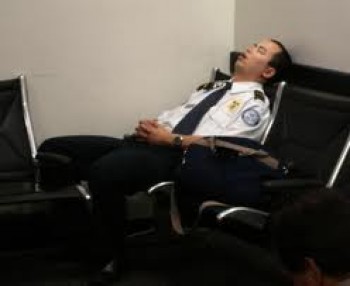 |
| TSA Agent Sleeping |
The New York Post is running a story about a former TSA screener's revelations that TSA screening is basically a big joke and the agency is filled with incompetence, apathy, waste, etc. This article confirms just about everything many have assumed about the TSA for years.
"Former Newark Airport TSA Screener Says the Job Does Little to Keep Fliers Safe"
February 23, 2013
The Police Loophole
The Police Loophole is maintaining a list of the growing number of firearm companies who are rebelling against encroachments on the Second Amendment by placing restrictions on the government agencies and employees that are passing laws that infringe on civilian gun ownership. See the Nice (and Naughty) list at www.thepoliceloophole.com.
December 22, 2012
How to Prevent Most School Shootings with a Proper Defense
Each time a school shooting occurs, people get terribly emotional and lose their common sense. They start demanding all sorts of new gun laws, thinking that will fix the problem. Ironically, none of the laws they demand would have prevented the past tragedies and have no substantial chance of preventing any future tragedies.
Here is a fact of life. Some people are killers. They like to kill people. They may be angry. They may be disturbed. They may be insane, but they like to kill, and they will kill. People have been killing other people since the beginning of time. Long before we had guns, people found ways to kill each other. Even if you take away the guns now, people will still find ways to kill each other.
Since some people are so passionate about killing, we have numerous strict laws against it, but killers disobey those laws. If a person is not going to obey laws against murder, why would that same person obey laws regarding to guns? Since killers do not obey laws, the answer is not more laws. The answer is defense.
The most effective way to prevent the vast majority of school shootings is to allow teachers with proper firearm training to carry secured (locked) weapons in the school. That way, when a shooter penetrates the school's defenses, the teachers will be armed and able to engage the shooter in a fair fight.
People will argue that a teacher might snap during class and shoot a child, but that is a flawed argument. If a teacher is angry enough to shoot a child, the teacher is certainly angry enough to beat a child to death. If a teacher is prone to violence, the teacher is dangerous to the children armed or not. If you cannot trust a teacher to be armed around the children, then you should not trust that same teacher to be unarmed around the children. By the way, just because administrators tell a teacher he/she cannot bring a weapon into the school, that does not mean the teacher will obey. Remember, only the law-abiding care about the rules.
For those who cannot get past the idea of armed teachers, a more politically correct solution is to station a police officer in every school whenever students are present. Since this would require an officer to be present around seven hours each day for around one hundred and eighty days each year at each school, the costs would be significant, possibly up to $100,000 per year.
All of this money does not have to be wasted, however. The officer does not need to just sit in an office or the parking lot. The officer can be around the school teaching the students during the regular school day. The officer can give lessons in traffic safety, gun safety, drug education, anti-bullying, abduction prevention, self-defense, conflict resolution, emergency preparedness, Internet safety, etc. Cops have a lot of training, and a lot of that training could translate to helpful lessons for small children. We live in a dangerous world. Why not prepare our children to survive it?
Yes, it would be expensive to station an officer in every school, but when you think about the safety of the children, would the costs be that severe? Let's say you can protect five hundred little kids for $100,000 or less each year. That works out to only $200 per year per student. In larger schools, the costs would be even less per child. When you factor in that each officer could actually be serving a legitimate educational role, the costs are really not that steep.
We do not even need to hire new officers to do the job. Just pull them from less important duties like busting massage parlors, pulling over people with expired tags or no seatbelts, and catching soccer moms in speedtraps on the way to the grocery store during the day. Which is more important: keeping the minivans from going five miles over the speed limit or protecting a campus full of little kids from a psychopath?
Well, even if people are not willing to pull cops off of non-essential duties or spring for the extra money to hire more officers, we still have the option of allowing teachers to carry weapons responsibly. The bottom line is we do not need fewer guns in school, we need more guns in the right hands in school. Think back to any school shooting that comes to your mind and ask yourself how things might have been different if some responsible adults in the school had been armed and able to properly protect the kids.
Don't ever forget, schools are one of the few places that have a full ban on guns. In theory, schools should be absolutely free of gun violence, but, in reality, how is the whole gun-free zone concept working? It seems to work perfectly for the shooter, because when he comes, he is the only one armed, and he knows it. Imagine how quickly the balance of power would shift if the shooter knows that when he starts shooting, someone is bound to start shooting back.
Subscribe to:
Posts (Atom)